
 North Dakota has eight distinct regions. North-central North Dakota’s Region 3 is comprised of Benson, Cavalier, Eddy, Ramsey, Rolette, and Towner Counties. Regional and community leaders from business, arts, education and community were recruited to shape the development of a public artwork that encapsulates the artistic, historical, and cultural legacies of the six counties.
Current Status:
Stakeholders selected artist team Shayna Grandbois-Herrera and Derek Poitra who will conduct site work and finalize the design.
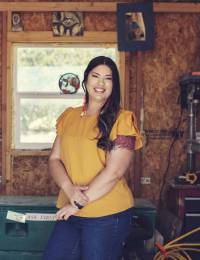 Shayna Grandbois-Herrera is a Turtle Mountain Chippewa stone sculptor based in Santa Fe, New Mexico, with nearly 30 years of experience in sculpture. A second-generation sculptor, she began participating in the Santa Fe Indian Market alongside her late father, renowned sculptor Rollie A. Grandbois, at the age of five. Under his mentorship, she developed a lifelong connection to stone carving, monumentality, and placemaking through art. Since his passing in 2016, Shayna has dedicated herself to honoring his legacy while continuing to build one of her own through sculpture that reflects her culture, experiences, and connection to the land.
Working primarily in stone, Shayna creates sculptures ranging from contemporary abstract forms to wildlife and figurative works. Her art explores movement, connection, and the relationship between form, land, and spirit, while drawing inspiration from nature, her culture, and the human experience.
Her work has been exhibited at the Santa Fe Indian Market, where she received an Honorable Mention in 2024, and has been commissioned for public and private collections throughout the United States and internationally. In June 2026, she completed a major international public art project in Junglinster, Luxembourg, Europe, fulfilling her late father’s vision by completing a monumental sculpture he began more than two decades earlier.
In addition to her artistic practice, Shayna serves as a Native Health Navigator at CHRISTUS St. Vincent Regional Cancer Center in Santa Fe, where she advocates for Native American cancer patients and communities throughout Northern New Mexico. Her work in healthcare and her work as an artist share a common focus on building relationships, strengthening communities, and creating spaces of connection and healing.
Although she was born and raised in the mountains of northern New Mexico, Shayna maintains deep roots in North Dakota through her enrollment in the Turtle Mountain Band of Chippewa Indians, where much of her family still resides. Throughout her life, she has spent countless summers and family visits in North Dakota, experiences that have strengthened her connection to the land, its people, and her cultural heritage while helping shape her artistic perspective. She is collaborating on the Region 3 public art project with fellow Turtle Mountain Chippewa artist Derek Poitra.
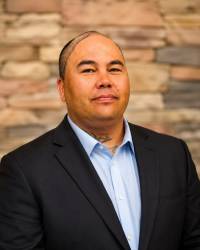 For Derek Poitra, art has never been limited to a single medium—it has been a lifelong pursuit of expressing beauty, honoring stories, and creating work with lasting meaning. An Ojibwa artist, Derek's creative voice is shaped by his heritage, a deep respect for nature, and a belief that every piece of art should carry purpose beyond its visual appeal.
For more than 25 years, Derek has worked as an oil painter and sculptor, studying the relationships between light, form, texture, anatomy, and composition. These years of experience in fine art have become the foundation of his approach to tattooing. Every tattoo is treated as a custom work of art, thoughtfully designed to complement the natural movement of the body while telling the unique story of the person who wears it.
His work moves fluidly between realism, ornamental design, floral compositions, and deeply symbolic imagery. Whether creating a quiet memorial piece or a large-scale custom composition, Derek strives to capture not only technical excellence but also the emotion and spirit behind each design.
To Derek, tattooing is one of the most intimate forms of artistic expression. A painting may hang on a wall, but a tattoo becomes part of a person's identity, history, and journey. That responsibility is one he approaches with humility, patience, and genuine respect for every client who entrusts him with their story.
Through every medium he practices - painting, sculpture, and tattooing - Derek's goal remains the same: to create timeless artwork that speaks to the human experience, reflects exceptional craftsmanship, and leaves a lasting impression long after it is first seen.
Although Derek has lived in several states throughout his life, North Dakota has always remained home. He now lives in St. John, where his connection to the Turtle Mountain community, the Northern Plains landscape, and Ojibwe traditions continues to shape both his life and artistic practice.
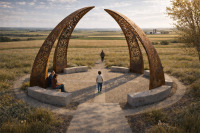 The artwork will feature two large-scale arches bending towards the middle, creating a dome-like area. The arches will be constructed from metal, featuring carved out designs relevant to the diverse peoples and cultures in north-central North Dakota’s Region 3. Featured under the arches are benches and an area paved with stones inscribed with key words, altogether inviting visitors to gather, rest, and be.
Region 3 Stakeholders began meeting in late 2023 to discuss the history, landscape, and cultural heritage of their home region. Located in north-central North Dakota, Region 3 is unique for being the only of the state’s eight regions with two tribal nations -- the Spirit Lake Nation and the Turtle Mountain Band of Chippewa. The Spirit Lake’s people are known as Mni Wakan Oyate, or “The People of the Spirit Water.” The Turtle Mountain Chippewa call themselves Anishinaabe, meaning “The Original People,” and may also be known as Ojibwe. French-Canadian missionaries, namely Father Georges-Antoine Belcourt, arrived in northern North Dakota in the mid-nineteenth century. White settlers, coming from Sweden, Norway, Finland, Iceland, and Germans-from-Russia, began immigrating to the region throughout the next fifty years, establishing settlements and homesteads and tilling the land en masse.
The landscape is varied. In the north, the tree-covered, rolling hills of the Turtle Mountains feature pockets of fresh water, which unfurl into unendingly flat farmland blanketed in row crops and dotted with houses. Southward, the expansive waters of Devils Lake shape the landscape.
Water, with its different names, meanings, and formative power, is integral to the region. Devils Lake is the name for both the region’s largest city and largest body of water. It is, however, a mistranslation of Mni Wakan, more accurately translated as Spirit Lake or Spirit Water. For the Spirit Lake Nation, the water has deep spiritual associations. For thirty years, Devils Lake has experienced a wet cycle, rising up and down, flooding farmland and threatening infrastructure. Fishing on the lake, historically for sustenance, is now an immense draw for outdoor recreationalists and forms a cornerstone of the regional economy. Algae blooms on the water pose danger. The water’s role is nuanced, multifaceted.
The Turtle Mountains are known as the heart of Turtle Island, otherwise known as North America. The legend of the turtle and the serpent is a creation story, teaching that Mother Earth arose on the back of a turtle. While Rugby (nearby in Region 2) claims to be the geological center of North America, Turtle Mountain claims status as the heart.
Sacred buttes – including Butte St. Paul (with special connection to Fr. Belcourt), Bear Butte, and Heart Butte – reinforce the connection between earth and sky, lifting one up and providing views of the land. The tribal nations’ histories are rich and storied, their influence strong. Many accomplished Native artists call the region home.
The northern lights and brilliant night skies mesmerize, particularly here. The wind and open prairie are essential elements, and here, the seasons are distinct and powerful in nature. Outdoor recreation like fishing, boating, and snowmobiling is widespread. Farming, agriculture, and the work of farmers shapes culture and life. The regional economy focuses on row crop agriculture, livestock, outdoor recreation, and outdoor tourism.
Stakeholders discussed turtles, hearts, and hills; medicine gardens and natural medicines. In addition to their subtheme, “Heart of the Land, Spirit of Unity,” they discussed others such as life on the prairie, prairie passion, the heartbeat of the Plains, the spirit of the prairie, the soul of the prairie, and other heart-related themes.
Stakeholders visited many sites, looking for one that could capture it all – the water, the farming and diverse landscape, both tribal nations. Was there one site that holds significance for Turtle Mountain, for Spirit Lake, and for the region at large? Should two sites be considered, and if so, is a powerful and awe-inspiring artwork still possible? Could different elements, like soil, be incorporated to reference what may be missing?
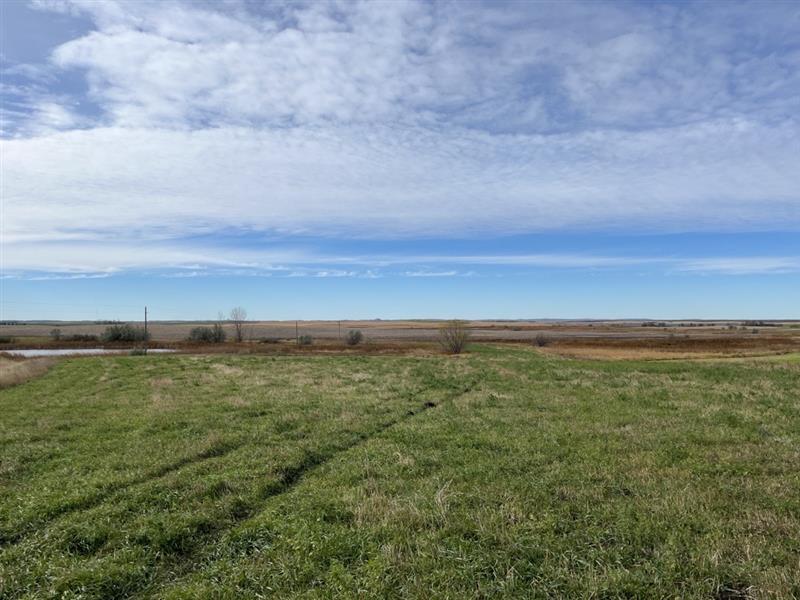
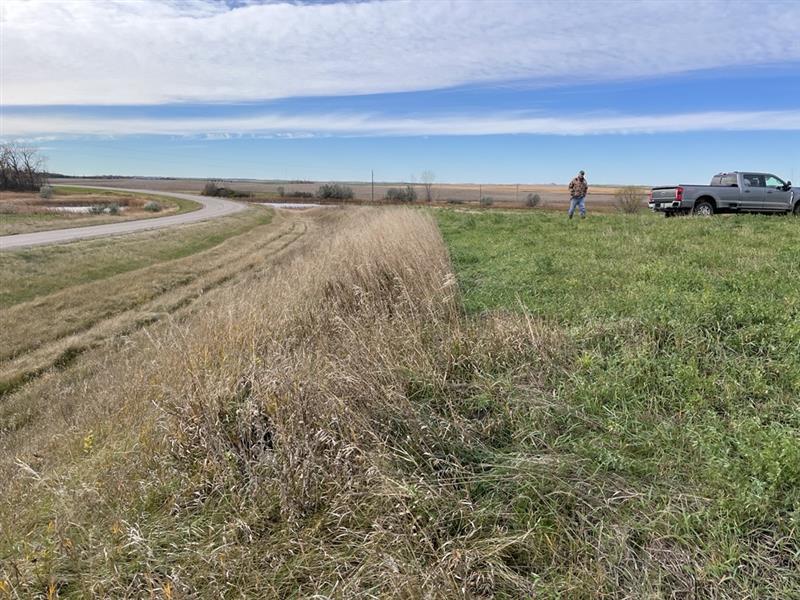
The project will be installed at a rural site located 7 miles north of Warwick, ND, on Woodrutten Road. The site highlights the area’s varied landscape, featuring sweeping views of cropland, small and large bodies of water, and, in the distance, a view of the Devils Heart Butte. The site's immediate surroundings reflect the diversity of people and histories in Region 3.
NDCA Board Member, Lead Contact
- Kristy Zaste, Owner of Mashkiki Wellness and Tribal Planner for the Turtle Mountain Band of Chippewa Indians (Rolette County)
Benson County
- Michaela Smith, Dakota Culture Instructor in Training, Cankdeska Cikana Community College
Cavalier County
- Amber Benoit, Northern Lights Arts Council
Eddy County
- Patti Larson
- Jennifer Parker, Artist
Ramsey County
- Lisa Crosby, Director, Lake Region Heritage Center
- Maddie Cummings, Library Director, Lake Region Public Library
- Collin Evenson
- Carla Freshette
Rolette County
- Brady Dyck, Administrative Assistant, International Peace Garden
- Jolene Keplin, TM Health and Education
- Lyle Poitra, Semi-retired tribal Consultant, assists Heritage Center & Tribal Natural Resources Dept (Sky Chief Park)
Towner County
* Looking for representatives from Towner CountyJohn Geyerman, Photographer; Vice President, Williston Downtowners (Williams County)